
When Fintech Speaks Your Language (literally)
How linguistic and cultural inclusion is driving the adoption of digital finance platforms in Southeast Asia.

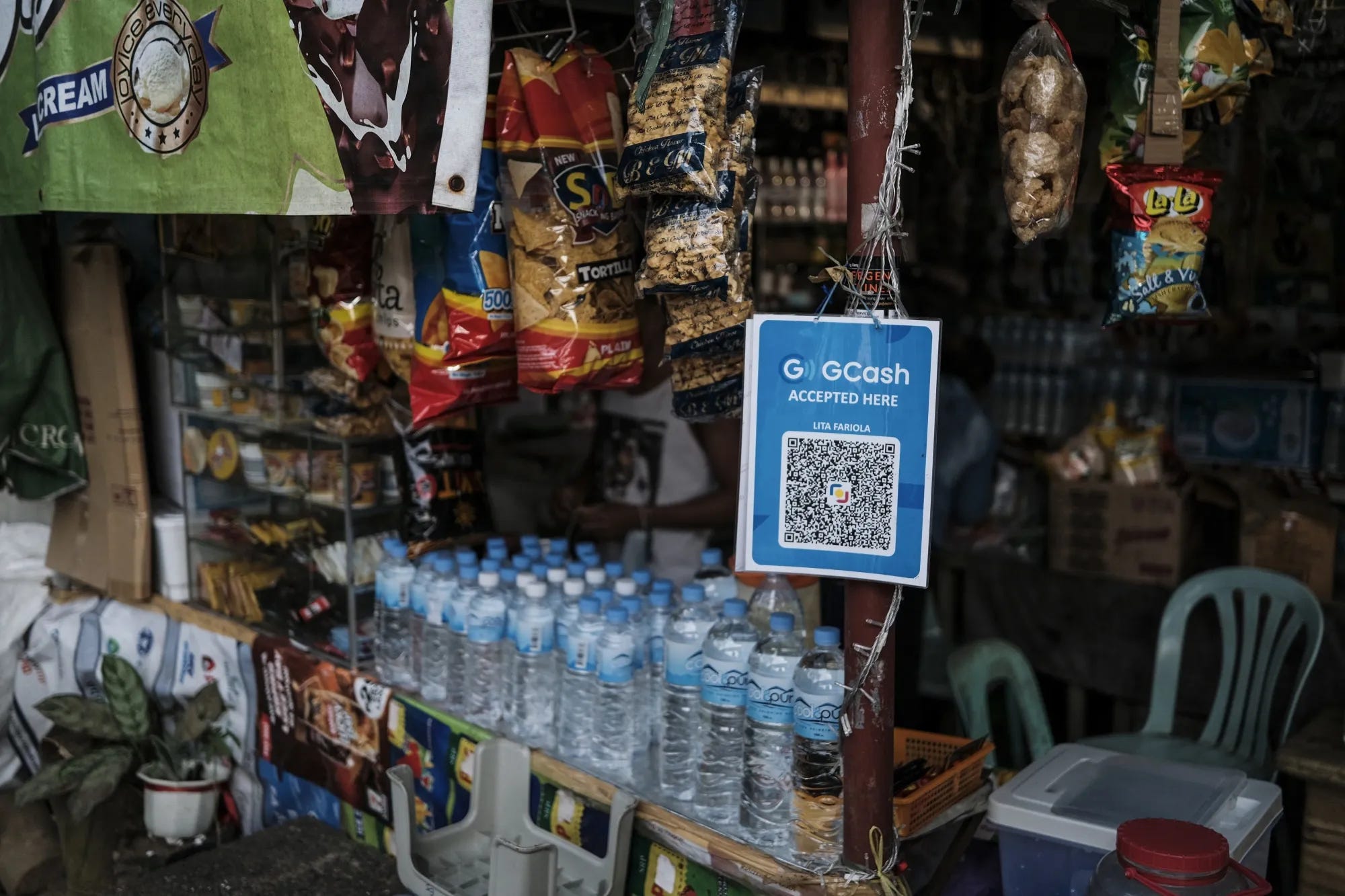
GCash, a leading Filipino fintech platform, is widely accepted by small businesses throughout Southeast Asia. Photo courtesy of Bloomberg.
A few weeks ago, I had the pleasure of hearing the remarkable, eloquent, and ever-so-stylish Nabiha Syed, executive director of the Mozilla Foundation, speak on the importance of linguistic diversity in training Large Language Models (LLMs). One point she made that has stuck with me since was how linguistic diversity is a driver of innovation — there are literally ideas that cannot even be expressed, and sometimes cannot even be thought of, in English. She also reminded me just how many languages exist in the world: in Southeast Asia alone, there are an estimated 1,200 to 1,500 languages spoken across the region (many of which include multiple dialects!). This linguistic diversity, in Southeast Asia specifically, isn’t just fascinating (and so, so under-researched), it has real implications for innovation and inclusion.
For startups aiming to reach markets in Southeast Asia, linguistic diversity presents a great opportunity (and well, lots of challenges, but those are more obvious, and not as interesting to write about). And nowhere is this tension between opportunity and access more visible than in fintech, specifically platforms that provide access to services such as bank accounts, credit, and digital payment. Moreover, the infrastructure for these platforms is present. Millions of people in Southeast Asia own smartphones and use the internet regularly, yet many remain outside the formal financial system. Nearly 200 million adults in the region do not have a bank account, and an additional 98 million are underbanked, meaning they may hold an account but lack meaningful access to credit, savings, or insurance.
Given that internet and mobile-device penetration across Southeast Asia is already high, it seems as though the barrier to formal financing is not infrastructure, but things like trust, language accessibility, and inclusive service design. In short, it’s not that people are cut off from technology, instead, they’re cut off from financial access that aligns with their language, needs, and cultural context. And being outside the formal financial system has real economic and social costs. Without access to bank accounts, credit, or digital payment platforms, people often rely on cash or informal lenders, which can be more expensive, insecure, and limiting. Small businesses, meanwhile, struggle to scale without credit histories or access to affordable financing. As such, platforms that support local languages and dialects can break down barriers to financial access, making linguistic inclusion a driver of real economic empowerment.
But is there even a demand for these digital financial platforms in Southeast Asia? Undeniably so. The region has some of the highest mobile phone and internet penetration rates globally, and digital wallets and payment apps have exploded in popularity.
In the Philippines, for example, GCash, operated by Mynt, has grown to over 94 million users, facilitating money transfers, bill payments, and online purchases directly through smartphones. Beyond offering services in Filipino and English, GCash has tailored its features to reflect local customs and everyday practices, including remittance workflows and micro-insurance products, which are vital for many Filipinos. The platform’s interface, customer support, and educational materials are designed to be intuitive for users across regions and dialects. With a $5 billion valuation and millions of monthly transactions totaling billions of pesos, GCash is a great demonstration that linguistic and cultural inclusion can be both socially responsible and a great business strategy.
This story is mirrored across the region. In Indonesia, GoPay, integrated within the GoTo super app, has grown by catering to the country’s linguistic and cultural diversity. By offering interfaces in multiple local languages and dialects, GoPay ensures accessibility across Indonesia’s 17,000 islands. And its efforts have paid off. According to its parent company GoTo’s earnings reports for 2024, the financial technology segment, which includes GoPay, had a gross transaction volume (GTV) of Rp240.8 trillion (approximately $15.7 billion USD) and a gross revenue of Rp3.7 trillion (roughly $241 million USD) for the full year. These numbers illustrate that understanding and integrating local context is a direct path to market leadership.
In Vietnam, the platform MoMo has similarly used cultural and linguistic inclusion to become a leading mobile wallet, now serving over 31 million users across more than 140,000 payment points nationwide (notably, these users are from both the bottom and middle of the pyramid). By embedding Vietnamese cultural norms into its workflows and using familiar symbols and practices, MoMo has cultivated trust and usability among users with limited financial literacy. In a market valued at $40.5 billion USD, platforms like MoMo are at the forefront of Vietnam’s digital payments revolution, demonstrating that attention to local context can unlock enormous financial opportunity.
The experiences of GCash, GoPay, and MoMo offer a clear lesson for fintech startups and investors in emerging markets: linguistic and cultural inclusion is a strategic advantage. Platforms that resonate with users’ local languages and customs do more than increase adoption; they foster trust, open new markets, and drive sustainable growth. In Southeast Asia’s diverse and digitally connected landscape, embracing this inclusivity is both a moral imperative and a necessity for a successful business.
Oh! And if you’re curious about fintech platforms that struggled to work in Southeast Asian markets, in part due to inadequate adaptation to the region’s linguistic/cultural diversity, as well as stiff competition from established players, check out PayPal’s initial expansion into Southeast Asia. Even as an established global fintech company, they encountered difficulties in their initial approach — it did not fully account for regional preferences and behaviors, leading to challenges in user adoption and market penetration.
Circling back, Ms. Syed’s insight into the transformative power of linguistic diversity resonates far beyond training LLMs. In fintech, understanding the languages, habits, and contexts of users is what allows platforms to bridge financial gaps and empower communities. GCash, GoPay, and MoMo show that embracing this diversity drives adoption, innovation, and returns. The success of these companies demonstrates that Southeast Asia’s unbanked and underbanked populations are not just a challenge to solve, they are an opportunity for entrepreneurs and investors to rethink what financial inclusion can look like in one of the most culturally diverse markets.